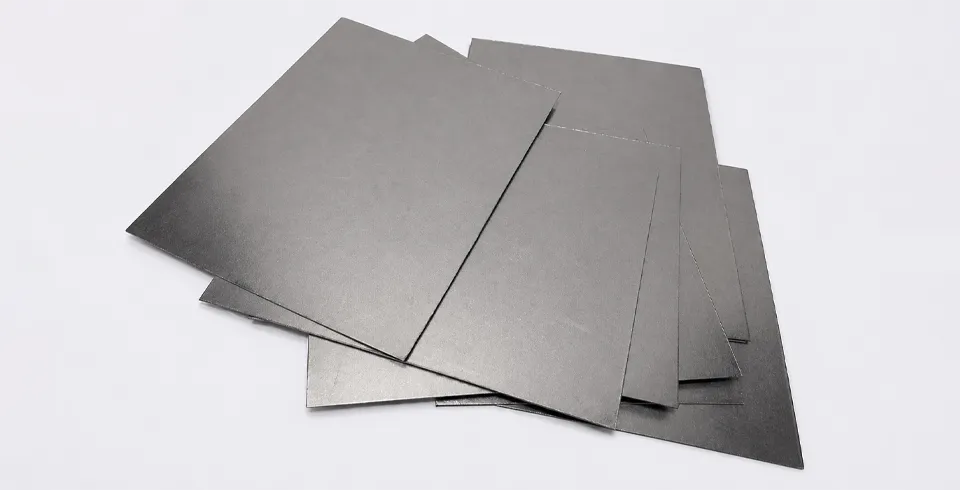
Composite flexible graphite bipolar plates are developed to overcome the limitations of conventional flow battery plate materials such as conductive PP/PE, flexible graphite, and isostatic graphite. Reinforced with a carbon fiber skeleton, this material offers high mechanical strength, excellent electrical conductivity, low density, and thin thickness. It also supports integrated molding with flow channels and weldable edges, enabling improved assembly efficiency and structural reliability.
In practical applications, composite flexible graphite bipolar plates are often used together with soft graphite battery felt in vanadium redox flow batteries (VRFB), where they work synergistically to enhance electrical conductivity, electrochemical performance, and overall system efficiency. These features make the product highly suitable for various flow battery systems and demanding energy storage applications.
| Thickness | Compressive Strength | Tensile Strength | Square Resistance | Specific Conductance | Work Temperature | Density | Hydrogen Permeability |
|---|---|---|---|---|---|---|---|
| 0.6–0.8 mm (typical: 0.8 mm) | ≥ 100 Mpa | ≥ 50 Mpa | 20–40 mΩ | 300–550 S/cm | −30 to + 180 °C | 1.4–1.6 g/cm3 | ≤ 5 × 10⁻⁶ cm3/(cm2·min) @ 0.15 MPa |